‘Maybe We Ought to Slow this Wagon Down a Bit’
Georgetown Select Board Temporarily Puts Brakes on
Potential New Form of Government –
Seeks Analysis, Definition of Problem to Be Solved
by Lonnie Brennan
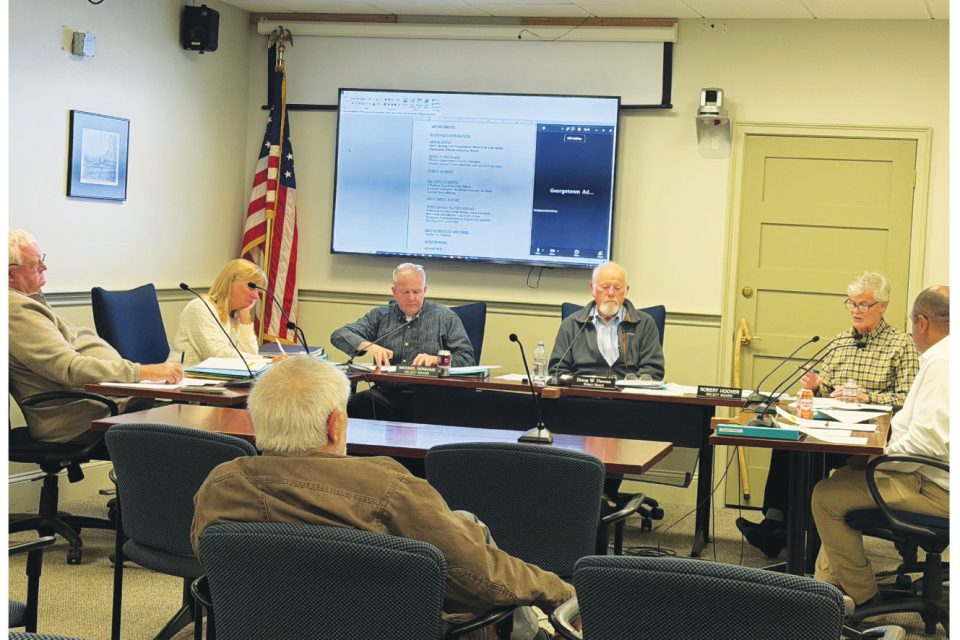
GEORGETOWN − “I was hoping that the chair of that committee would have been here tonight,” Select Board Chair Doug Dawes opined as the board took up the matter of reviewing the Charter Committee’s four-and-a-half-page report which states that the town should move forward with a drafting a charter – a new form of government which would potentially eliminate most elected positions in town.
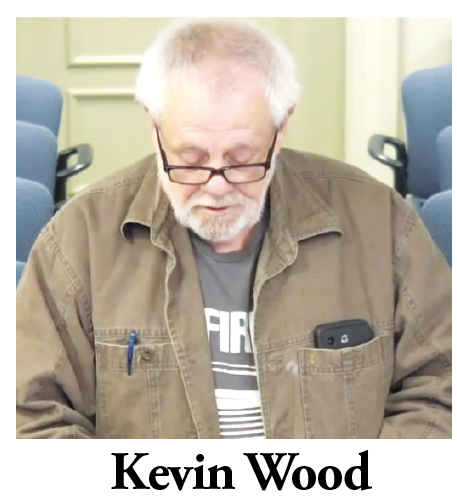
Resident Kevin Wood, during the public comment portion which began the meeting, pointed out that the report from the exploratory charter committee stated that the town’s problem is “unclear authority.” He went on to point out, however, that the committee never examined the cases that prove that point.
Wood also noted that there were problems with not following existing bylaws, let alone new ones. He stated that “in March, this board voted to review the process used to remove the conservation agent. Chair Hoover then refused to put that review on the agenda. On April 27, Chair Hoover stopped criticism of that conduct mid-comment and had [police] Chief Sedwick remove the speaker. On July 8, the New England First Amendment Coalition wrote that your actions are unconstitutional. The letter was addressed to this board. It was emailed to you, [current] Chair Dawes. It is in no packet. It was not distributed to the board. You withheld it.”
Wood went on to point out that “these are not personality disputes; they are your failures to apply the rules you already have …Nothing in this report explains who would enforce the next rules when this board will not enforce the current ones.”
When the agenda topic came up later in the meeting, after some discussion, Selectman Ed Dobie asked if Mr. Wood could explain more about what he stated in his public comments.
Wood was recognized by the chair and replied in part: “I think your board has three options right now. The first option is to not accept the recommendation, either dissolve or not dissolve the exploratory charter commission …you have to analyze the information given in that report and believe it is
sufficient to move forward into a
charter or if additional information from an exploratory committee is necessary for you to make that decision.
“The second option is to approve the recommendation, dissolve the exploratory committee, and then either establish a charter committee, which is appointed by you, which then puts together a special act to change our town government or to put it to the voters to elect a charter commission from the citizenry who are not appointed by you, to do the same thing…”
Wood went on to state that there are a lot of reasons not to accept the charter committee’s recommendation to move forward with a new form of town government. Commenting on the committee’s letter to the select board, Wood said “I don’t think it’s thorough. I don’t think it explains what the problems are that they have uncovered. And it doesn’t give you a needle to say, which way should we go if any way?’
He continued “they spent $8,000 on the Collins [consultants] report. You don’t have it [a copy of the report]. You don’t know what they [the consultants] said. You don’t know how they [the committee] interpreted it. That’s your oversight responsibility of subcommittees: to look at what they did and how they arrived at their decisions, not to just take their recommendation carte blanche. That’s your job.”
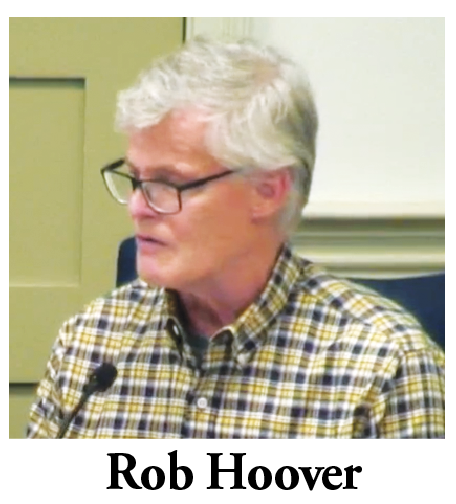
Selectman Hoover disagreed on the charter committee’s role, stating that the role of “the committee was to make a recommendation to this board.” The next steps would then take place in a long process by a Charter Commission which would then “educate the town” on the pros and cons of a new form of government.
“I saw this as moving the ball just forward a little bit, not risking anything in doing that. I see no risk to it,” Hoover said.
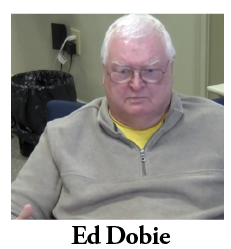
After some more discussion, Selectman Dobie said, “I don’t believe what Mr. Wood said is unreasonable … and I do think that each one of those things that he said has merit and we should be discussing that as well.”
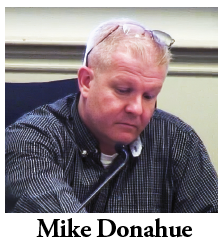
Selectman Donahue noted that the committee stated that there’s an issue with hiring and firing. “So, if there’s an issue, could you walk us through a couple of – one or two – examples that we think it would be worth bringing forward or highlighting?” He said there was no need to mention names, just provide a high-level example that explains what the “hiring and firing” problem is, and why a new form of government is required to fix that problem. Donahue asked if it were possible to review the consultant’s report, and also if there was any review of bylaw-related issues, and could we “get meat to go on with some concrete examples?”
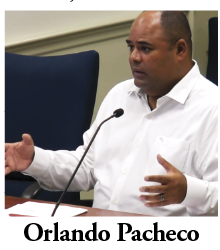
Town Administrator Orlando Pacheco argued that a centralized authority – eliminating for example the positions of elected town clerk, and other elected officials, would eliminate what he referred to as “a bunch of independent countries setting their own separate policy direction…”
Donahue questioned if he could just get a few examples: “if we have one or two of those examples to help kind of tell the story one way or the other, and that’s all I’m asking, right? Is there a bylaw example? Is there a hiring and firing example?”
The charter process could change the assessors, planning board, water commissioners, highway surveyor (highway dept. head), town clerk, town moderator, and others positions to be appointed by the select board, instead of elected by the voters. In theory, only the Select Board and School Committee would be elected positions, town meeting could be eliminated in the short term and replaced with a “representative” town meeting, or, if the town reaches the resident threshold of 12,000 residents, adopt a city form of government.
Selectman Dobie summarized his thoughts, praising the committee for meeting, and stated that they gave us “a great first start, but during my short tenure in this seat, I’ve learned that a lot of the issues we have in town are miscommunication, misunderstanding – things aren’t perfectly clear. And I sense that the charter and stuff that we are going to do is going to make everything more clear. So, what you’ve done is not a waste of time, but I do think that Mr. Wood has provided us with some food for thought – have you thought of this? Have you thought of that?”
“Let’s think about, let’s extrapolate things forward first and see how it affects how we do it and does it open us up to, or our descendants coming in here, does it open them up to looking at something and saying, ‘That wasn’t done correctly.’ We can’t assume that we’ve done it correctly. We have to make sure we’ve done it correctly,” Dobie concluded.
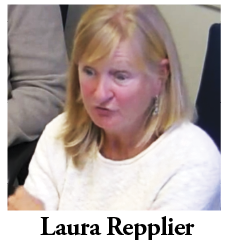
Selectwoman Laura Repplier said that “when I look at the list of issues that they suggested that need to be addressed, the authority structures, the review of town governments, that is such a broad, broad, undefined statement.”
“Financial management,” she added, “which they boil down to just the capital improvement plan, which is just one small part of our financial management and seemingly hasn’t been required or utilized in quite some time. Elected versus appointed, specifically regarding three roles in town. And then the role of the TA, which we’ve had some conversations about how that was interpreted through the bylaws recently. And then you talk about department alignment, which seems to be a bigger issue, which is not addressed in here and nothing is kind of revealed in here …”
“These don’t seem to be sort of – large enough – for us to be pulling the rug out and reapplying a new rug,” Repplier said. “These are things that can be fixed. And I’m not convinced of – I never have been convinced for – the need for a charter. But another issue I have is that this charter will take years, years, years, years … and we have immediate things that need to be fixed. And if we go for a charter, we also need to address the issues with various bylaws, the parts of our bylaw structure that need to be tightened and understood or be made clearer and tighter in the meantime.”
Hoover said a lot can be done in the meantime while the charter commission does its work.
Repplier summarized that “Okay. I just want to take us back to this wherever I found it [shuffling papers]: The goal is presenting a proposed charter, not more discussing whether we need a charter, but putting a charter together and bringing it to the town. Okay. So, we’re not doing any more exploring? We’re going forward and getting it done?”
The town administrator noted that it can be a scary process, as there is always a fear of change. Repplier retorted “Just for the record, I’m not scared.” She wanted to understand why a new form of government was needed and expected some more details.
Dobie asked if it made more sense, before spending perhaps another $50,000 minimum on consultants, for the town to address any bylaw issues, and clean up what the town can clean up on its own. “Maybe we ougth to slow the wagon down a bit” he said, regarding rushing forward with spending and changes to the government structure.
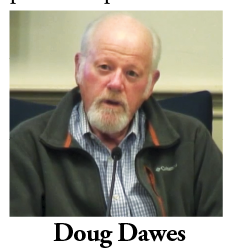
At the conclusion of just under 50 minutes of discussion, Chair Dawes suggested that the charter committee could meet once or twice again, take in some questions from the Select Board, perhaps have a joint meeting. “I would think that maybe one or two more meetings of the charter commission, excuse me, charter exploratory committee may be in order just to maybe tighten things up in the report,” Dawes said.
Hoover asked for a list of specific questions from the board members for the committee to consider which members said they would forward to him.
Hoover had stated in the meeting that”I suppose you can go back and add those kinds of items and I suppose if the committee wants to do that, they could say, ‘Yeah, we would do that.’ What I guess I wouldn’t want to do is do that with an understanding that after all of that time again spent that we’re just going to come back and vote no.”
After some back-and-forth, Dawes added “well, I like the report. It addresses a number of issues, but I was left wanting, because it wasn’t really clear to me.”
Pacheco interjected “Rob, I think the other thing when it comes to charters, you need to prepare yourself just so you don’t get mentally too upset. You may never give some people enough information that they’re going to be comfortable with, and that’s OK too.”
Following the meeting, Donahue forwarded to the board members more than a dozen questions which listed the conclusive statements made in the charter committee’s report, which had no discussion, citations, notes in the committee’s meeting minutes, the consultant’s memo, nor in any other committee document.
Donahue asked for clarification to how the general conclusive statements were made without ever appearing in any of the committee’s work product, including where the committee stated that authority over personnel is unclear, the committee’s concerns that there has not been turnover in the highway surveyor’s position, the committee’s statement that the town administrator’s authority is undefined, etc. He sought examples or some explanation for several items and why the statements are in the report. Again, as Chair Dawes had noted at the start of the discussion, for this potential pivot point for the town, the board might have benefited from having the chair and/or members of the exploratory committee present to discuss the matter.
Concerns about rolling a snowball down the hill remain. “Once started, the charter could become a self-fullfiling entity, impossible to stop,” a member noted after the meeting.♦